Search engine optimization (SEO) can feel overwhelming, especially for Australian not-for-profit organisations with limited marketing budgets. But one of the simplest—and most effective—ways to improve your visibility online is by using SEO meta data correctly. Let’s break down what it is, why it matters, and how you can make the most of it.
What is SEO meta data?
Meta data is information embedded in your web pages that helps search engines understand your content. The two most important types for SEO are:
- Meta title: The clickable headline that appears in search results.
- Meta description: The short summary under the title that tells users what your page is about.
These don’t appear on the page itself, but they play a big role in how your site shows up in Google and other search engines.
Why does meta data matter?
- Improves click-through rates (CTR): A clear, compelling title and description encourage people to click.
- Helps search engines understand your content: Well-written meta data signals relevance for specific keywords.
- Supports your brand: Consistent, professional meta data builds trust and credibility.
Best practices for meta titles
- Keep it under 60 characters so it doesn’t get cut off.
- Include your primary keyword near the start.
- Make it clear and descriptive, not spammy.
- Add your organisation name if space allows.
Example:
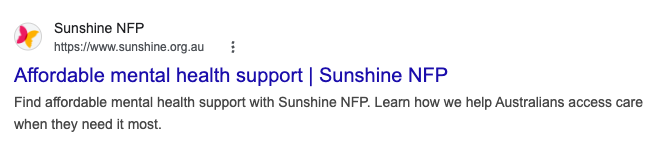
Affordable mental health support | Sunshine NFP
Best practices for meta descriptions
- Keep it under 160 characters.
- Summarise the page content in plain language.
- Include a call to action if possible.
- Use keywords naturally—don’t stuff them.
Example:
Find affordable mental health support with HopeCare NFP. Learn how we help Australians access care when they need it most.
Here’s how this looks in Google’s search results
Quick recommendations
- Write unique meta data for every page—don’t copy and paste.
- Avoid vague phrases like “Welcome to our website.”
- Think like your audience: What would make them click?
- Review regularly: Update meta data when content changes.
Final thoughts
SEO meta data is a small detail that makes a big difference. By crafting clear, keyword-rich titles and descriptions, you’ll improve your search visibility and attract the right visitors—without spending a cent.